- 403-313-6802
- info@conscientiacounselling.ca
- NO WAITLIST

EMDR Therapy Calgary
EMDR stands for Eye Movement Desensitization and Reprocessing. It’s a therapeutic approach developed in the 1980s by Francine Shapiro. She discovered by chance that eye movement significantly reduced the intensity of her connection to traumatic experiences. She was a psychologist and began research with military personnel, finding that their symptoms decreased dramatically as well. This led to the development of EMDR therapy.

EMDR Treatment
Coping with trauma is complex because our minds and bodies continue to react to overwhelming or threatening experiences long after they’ve passed. Traumatic events often don’t feel “finished,” because our bodies and brains hold on to patterns of reactions, emotions, and bodily sensations that can resurface and trigger trauma-related responses.
What makes this even more challenging is that these lingering effects often show up as symptoms or struggles that don’t immediately appear connected to trauma. They reflect the ways our mind and body once adapted to constant danger, feeling stuck, or being too young or powerless to protect ourselves.
Trauma doesn’t feel like a memory or something from the past. It often shows up as if it’s happening now. Learning to distinguish between a trauma-based reaction and a present-moment response takes understanding, awareness, and practice.
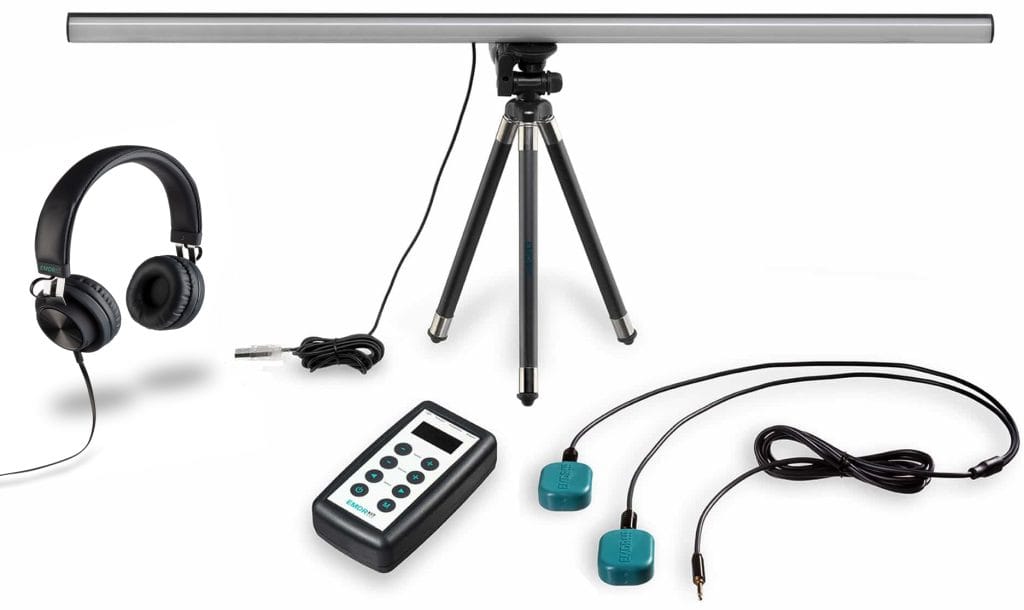
This is where EMDR treatment comes in. EMDR stands for Eye Movement Desensitization and Reprocessing. It allows to process the trauma in a safe way by activating the parts of your brain and memory using bilateral stimulation.
We use a light bar, pulsors and or headphones to engage both sides of your brain. While you pay attention to what is happening in your body and how you remember events, in a safe and careful manner.
EMDR Therapists in Calgary
EMDR therapy is growing in popularity, especially in Calgary, but it’s crucial to ensure your therapist is properly certified. EMDR should only be administered by a certified EMDR therapist at risk of being re-traumatized. Certification in Canada is regulated by EMDR Canada, which works with the EMDR International Association (EMDRIA). If a therapist isn’t certified by these bodies, it’s best not to proceed with treatment.
You can verify certifications on the EMDR Canada website, and as a client, you have every right to ask your EMDR therapist about their qualifications and training.
At Conscientia Counselling, we have two EMDR therapists. Don’t hesitate to get in touch with us today to book your session.
At Conscientia Counselling, we have trained and certified EMDR therapists who are happy to help you heal.
EMDR FAQ.
In short, no. However, the reality is more nuanced. There is an important distinction between reliving and reprocessing a traumatic event. Reliving can lead to retraumatization, whereas reprocessing involves recalling the memory from a grounded, safe place. In reprocessing, the event feels more like a distant memory rather than something that overwhelms or overtakes you.
In EMDR, you reprocess trauma; you do not relive it, nor are you retraumatized. This holds true when the work is conducted by a properly trained and certified EMDR therapist.
The tapping, buzzing, and eye movements used in EMDR help stimulate both sides of your brain, a process called bilateral stimulation. According to EMDRIA, this stimulation supports your brain’s natural healing ability by helping it safely access and reprocess difficult memories. When bilateral stimulation is paired with recalling a distressing experience, the memory becomes less emotionally charged and easier for your brain to integrate. This is why EMDR can reduce the intensity of triggers, shift negative beliefs, and create a sense of resolution. Bilateral stimulation can be done through eye movements, gentle tapping, or alternating hand-held buzzers, allowing the process to be tailored to what feels most comfortable for you.
The goal of EMDR is not to remember every detail of what happened. Healing does not require a complete or perfectly accurate recollection. Instead, the focus is on reprocessing the aspects of the experience you do remember so they no longer intrude on your daily life. Ultimately, the aim is to reduce or eliminate trauma-driven responses that you may have come to view as part of your personality, but are in fact learned survival strategies.
Absolutely. EMDR focuses on reprocessing the emotional experiences your brain and body have stored from the past. We work with clients dealing with chronic stress, low self-worth, difficult or painful past relationships, burnout, childhood neglect or abuse, and many other forms of unresolved emotional distress.
After an EMDR session, it is common to feel tired; your brain has been working intensively throughout the process. You may also experience emotional release, increased clarity, and greater self-understanding. At times, you might notice temporary emotional fluctuations, which are a natural response to the depth of the work being processed.
Yes. Although in-person sessions are generally preferred, EMDR can be conducted virtually as long as your environment is safe and free of distractions. It is essential that you are able to give your full attention to the process. If you are unable to stay fully engaged from a remote location, it is more appropriate to complete EMDR in the therapist’s office, where they can monitor your body language and ensure your overall safety.
Technically, no. Your therapist will work with you in creating a safety plan with interventions such as the CALM PLACE, Breathing, grounding, journalling, thought logs, etc. These will be tailored for your needs and preferences.